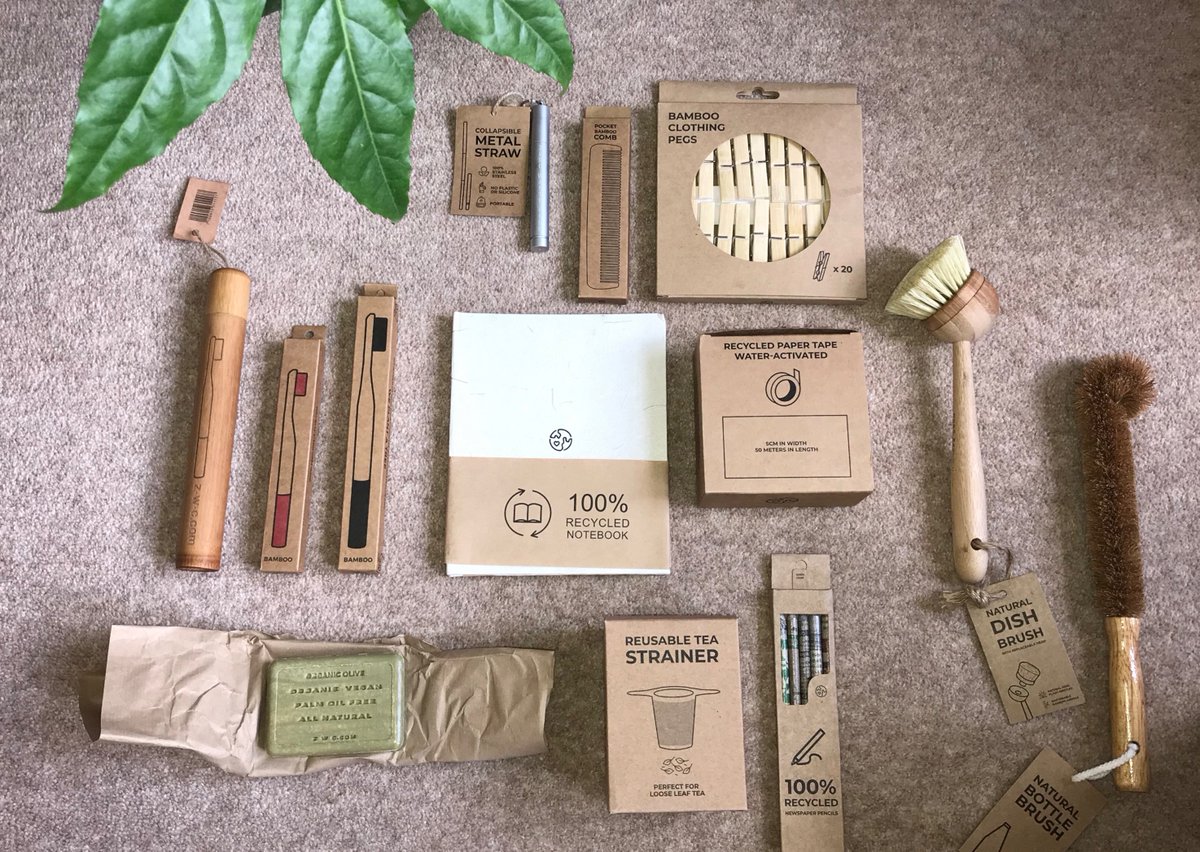
the green movement helps us be part of the solution to plastic pollution

Follower

Search

Bài đăng phổ biến

Thứ Hai, 21 tháng 10, 2019

Benefits Of Plastic-free Style

1.Benefits of living with less plastic:

+Less plastic makes us more ecologically aware
On a related note, a huge amount of plastic derived from petroleum products, in other words, a non-renewable resource. Even the separation an recycling of plastic is energetically intensive,  and we have better options.
       
+Less plastic makes us healthier
There is a real risk of the carcinogens from plastic leaking in your foods, drinks and even your beauty products. This can have a significant impact on your health depending on the amount of plastic in our lives. Less plastic packaging will lead to better and healthier food and drink choices, as well as beauty products. And your live can be able to be longer on average.


2.Benefits of zero waste in plastic:

+Zero waste reduces our climate impact
The U.S. EPA has estimated roughly 42% of all greenhouse gas emission are caused by the production and use of plastics, including products made from plastic and packaging. Reducing, reusing and recycling will conserve energy and dramatically reduce our carbon emission.

+Zero waste minimizes redundant materials
Reducing and reusing means fewer products are made. Recycling keeps waste out of landfills ,incinerators and provides manufacturers with recycled materials instead of raw materials to make new goods.  

5Rs Principles

“Refuse” : Denying the object that you don’t need, even though it’s free.

“Reduce”: If you don’t use something anymore, you should sell it or donate it to the charity. Making a list before shopping, buy as least as you can so that you can prevent wasting money, products,..

“Reuse”  : Converting utensils in your house such as: old towel can turn to a tablecloth. Always bring cloth bag or glass bottle in order not to use much plastic bag or box.

“Rot”      : You can use residual food to make compost. If you can not make compost, you should divide your trash into organic or inorganic so that can make easier for garbage collector.


“Recycle”:You had better know which trash can be recycled and trash cannot be recycled. Limiting to buying and using plastic bag and box. You should buy products that can decompose it self and use more cloth bag and glass bottles.

Chủ Nhật, 20 tháng 10, 2019

Facts and Consequences

FACTS and CONSEQUENCES
According to the United Nations report, 1 million plastic  bottles are consumed worldwide per minute, while it is up to 5,000 billion disposable plastic bags used every year. A total half of all plastic products are disposable, from straws, fishing lines to baby diapers or wrap.


Each year, the world generates about 300 million tons of plastic waste, roughly equal to the weight of the entire global population. This plastic accounts for 10% of total waste currently negatively impacting on the environment, economy and human health.

 This type of plastic has the characteristics of being difficult to decompose. A plastic bag, sometimes used for 5 minutes, takes only 5 seconds to produce and takes 1 second to throw away; but to decompose, it takes from 500-1,000 years.

Bottle:450 years
Plastic glass:300 years

Nearly one-third of plastic bags that people use cannot be collected and processed. As a result,plastic waste is constantly generated, everywhere, causing a disaster that scientists call is "white pollution."

White pollution
Analysts estimate that if the pace of use of plastic products continues to increase, there will be an additional 33 billion tons of plastic produced by 2050, and thus more than 13 billion tons of plastic waste will be buried in landfills.


Currently, the world is facing more than 9.1 billion tons of plastic waste accumulated on Earth. Plastic waste, including being collected and sent to landfills, still exists for hundreds of years, altering the physical properties of the soil, causing soil erosion, preventing soil from retaining water, nutrition and preventing water. Oxygen passes through the soil, affecting the growth of plants …

Action speaks louder than voice

    
1       


1 .Starbucks:

July 9, 2018, Starbucks Coffee Company announced that it will eliminate single-use plastic straws from its more than 28,000 company operated and licensed stores by making a strawless lid or alternative-material straw options available, around the world. Starbucks, the largest food and beverage retailer to make such a global commitment, anticipates the will eliminate more than one billion plastic straws per year from Starbucks stores.


2  .The body shop:

        -The Body Shop is stepping up its sustainability efforts with the launch of a new scheme designed to benefit both people and the planet. In a bid to tackle plastic pollution, the high street beauty chain has announced it will purchase 250 tonnes of Community Trade recycled plastic from Bengaluru, India, to use in nearly three million 250ml haircare bottles by the end of 2019. This marks the start of a wider ambition, which is to introduce Community Trade Recycled plastic across all plastic used by The Body Shop within three years.  The brand will also be relaunching its in-store Recycle Rewards scheme, whereby customers can earn vouchers for bringing in their used bottles. Aside from helping fight pollution, the new scheme – which has been launched in collaboration with ethical sourcing platform Plastics For Change – will also serve to empower people. The Body Shop hopes that by using the abundant resource of recyclable plastic that already exists, it will not only tackle the existing problem, but also help to empower waste pickers with access to more sanitary working conditions, a fair price and the respect and recognition they deserve. The new scheme means workers will also get help in accessing services such as education, financial loans and healthcare

                                                                                                                               3.MAC: 

  Perhaps the most well-known of all recycling programs is MAC’s Back to MAC program. Recycling with Back to MAC is simple: All you have to do is bring in six empty “primary containers” (meaning, an empty bottle of foundation, a panned compact or lipstick tube, empty pigment jars — in other words, the actual container that encases the product, rather than the cardboard box it may come in). In exchange for your six empties, you’re entitled to one free lipstick of your choice (valued at $17). If you can’t make it to the store, you can also request an online form and print a mailing label to get your empties out of your vanity (or your handbag) and return it Back to MAC. 


4     4.  Kiehl’s:

       Kiehl’s reward program for recycling — appropriately called Recycle and Be Rewarded — understands that you may not finish all your products at once, and you also probably don’t want to hold onto your empty skincare products. Instead, you can recycle your empties as you finish them, and each time you bring them back to a Kiehl’s store, you’ll get a stamp; once you get 10 stamps, you’re eligible to trade it in for your choice of a travel-size item (worth up to $11). A spokesperson for Kiehl’s tells us that, since introducing the program in 2009, customers have recycled 5,290,865 empties — and last year alone, they brought back an average of 67,683 empties each month. There are a few stipulations, however; only full-size items can be counted as a “stamp” on your rewards card, but that shouldn't stop you from recycling, of course — Kiehl’s will accept any travel-size or complimentary items to be recycled. If you’re a skincare enthusiast, or live in a home with multiple skincare enthusiasts, and are constantly going through products, you can still only collect one reward per month.